
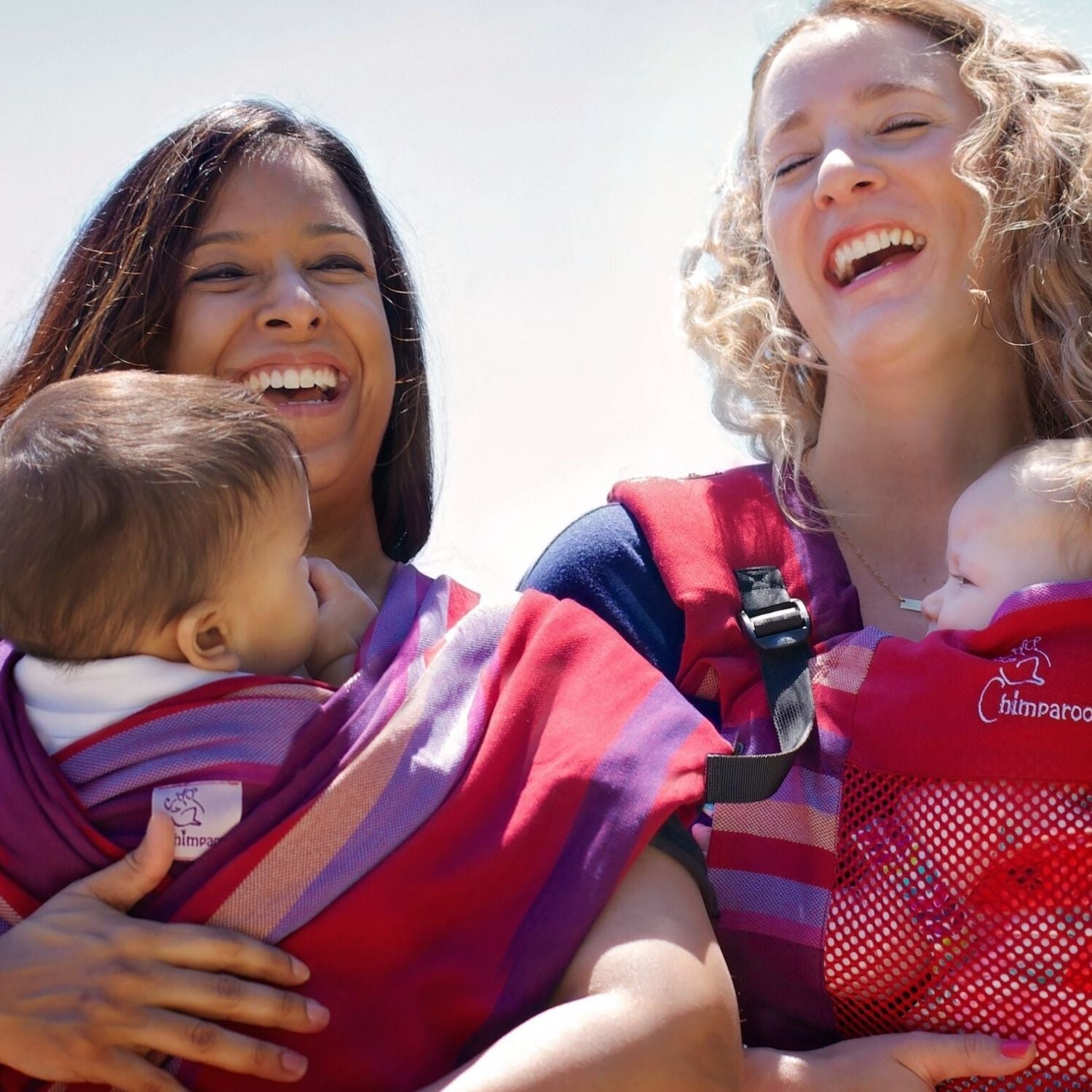
There are three ways to carry your baby: on your front, on your back, or on your hip. The best position is the one that keeps both baby and wearer comfortable while respecting baby's physiology and needs. Ready to explore the pros and cons of each position so you can choose the one that suits you?
Front carry: the most reassuring position

Pictured: a dad with the Trek Air-O baby carrier in Black + Aqua.
Pros
- This position is very reassuring for a newborn. Baby stays close to their parent, and eye contact is especially comforting during the first three months.
- With baby so close, it's easier to respond quickly to their needs.
- It's very practical for breastfeeding. For more on nursing while babywearing, watch the replay of our Facebook Live.
Cons
- Carrying on your front can be quite bulky, and baby's presence limits your movements.
- It takes a lot of vigilance: you need to make sure baby's head is supported at all times.
- It gets harder as baby grows, since they take up more room and their movements become livelier.
Tip: a front carry is perfect for newborns because it's so secure and makes it easy to respond to their needs quickly. As baby grows, though, it becomes less ideal. It's better to move to a hip carry or, even better, a back carry.
If you choose a forward-facing position, please follow the safety precautions. We will publish an article on this topic soon.
Our front-carry demonstrations are available here: watch the videos. The Trek Air-O, Multi 2.0, PöpNgo and EvöAir baby carriers all allow a front carry, as do our woven wraps and the adjustable ring sling.
Hip carry: a compromise between closeness and freedom of movement
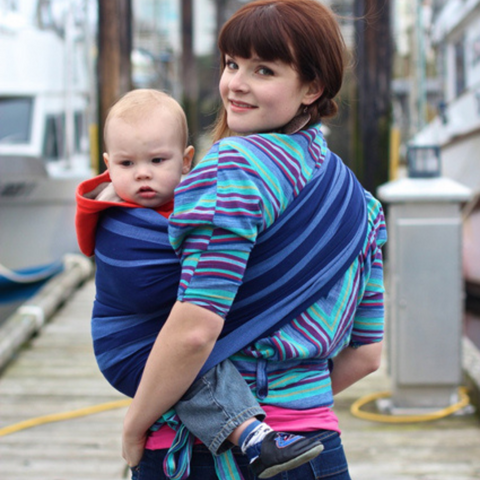
Pros
- A hip carry lets you keep an eye on baby while staying close.
- It gives you more freedom of movement than a front carry.
Cons
- Every hip position creates an asymmetrical load, so it's less comfortable over longer periods.
Pictured: a mom out for a walk with a ring sling.
Tip: carrying on the hip with a ring sling is the simplest and most practical option, and it's very comfortable too. All our wraps, the Mei Tai and our structured baby carriers also allow this position.
Back carry: maximum comfort for the wearer

Pros
- A back carry offers maximum freedom of movement and the best comfort for the wearer.
- It also provides ideal weight distribution, especially for a bigger, heavier child. It's perfect for long outings and hikes.
- Your child benefits too. A back carrier places them in a natural, physiological position, facing the same direction as you. Their field of view is wider, so they take in more sensations and stimulation. With their curiosity awake, little ones join in daily life, at home or outdoors.
- When it's hot, a back carry is the best option because it leaves baby's shoulders free so they can enjoy a little coolness.
Pictured: a family apple-picking with the PöpNgo baby carrier.
Cons
- This position can feel a little stressful for a new babywearer, since you can't easily see your child to check their positioning. It takes some practice.
- It's harder to respond to your child's immediate needs.
Tip: with a back carrier, your child is behind you and you can't properly see how they're doing. We recommend waiting until your little one can move from lying down to sitting on their own before you start back carrying. The ability to hold their head, neck and torso steady usually appears between four and six months.
Experienced wearers will tell you it's possible to back carry an infant safely. To do it without risk, it's essential to master the carry you're using.
This Thursday, join us on our Facebook page for an online event on this topic. On the program: a talk on the different babywearing positions, demonstrations and a Q&A with our babywearing expert, Christine Duhaime. To join, head to the Facebook Live.
Above all, remember: the best position is the one that keeps baby and you as comfortable as possible, respects baby's physiological development, and feels right to you.
On our YouTube channel and our FAQ page, you'll find plenty of helpful resources to develop your babywearing practice. You can also get in touch with us here.
Share:
7 Criteria to Choose Your Baby Carrier or Wrap
5 tips for safe babywearing