
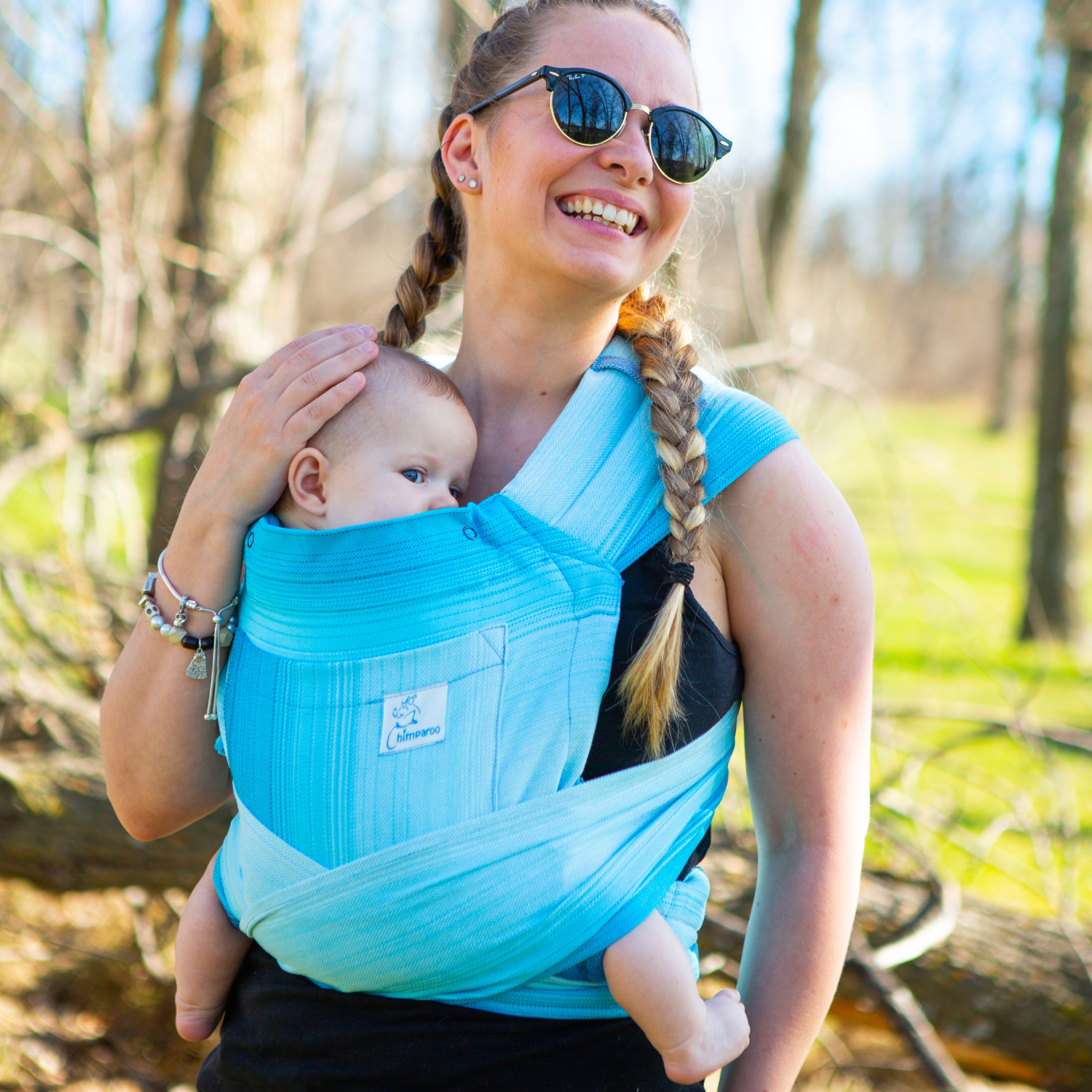
A new baby's arrival is often hard on the wallet! To keep costs down, turning to used items can be an excellent option. For eco-minded parents, buying secondhand is also a great way to welcome baby while acting responsibly.
So before buying your baby carrier, why not ask around to see whether anyone has one to sell, give away or lend? Little ones grow extremely fast. Baby items often get used for only a very short time, and parents increasingly want to give things a second life. There's no shortage of resale platforms and swap groups, so let's take advantage!
Before you buy used, though, there are a few things to consider. Here are 5 tips for choosing a secondhand baby carrier.
1. Has the carrier been recognized as safe?
Prevention is better than cure! To check whether the carrier you're eyeing is safe, look at the certifications the product holds and whether it belongs to a batch that has been recalled.
For baby carriers, there are several certifications that attest a product is safe: the International Hip Dysplasia Institute, OEKO-TEX Standard 100, Confiance Textile and the Mom's Choice Awards.
Next, is the item you're considering part of a recall? A recall happens when a product has been identified as unsafe or dangerous for its users. To find out whether a recall has been issued for your product, enter the model and brand name in the search bar of the Government of Canada's Recalls and Safety Alerts website.
Chimparoo holds all the certifications listed, and no Chimparoo baby carrier currently on the market (new or secondhand) belongs to a recalled batch.
2. What is the quality of the fabric?

Fabric quality is very important. Cotton holds up very well in the long run, but spandex deteriorates over time. To picture it, think of a spandex swimsuit whose rubber fibres break down. Many of our products are made of soft, 100% organic woven cotton. How the fabric has been cared for also affects fibre wear. If it was washed in hot water and dried on high heat, the fabric is likely to be a bit more worn. To help you check the fabric's condition, do strength tests by pulling on the different parts that support baby.
For more tips on how to wash your carrier before using it for the first time, watch this video: click here.
Pictured: a baby in the PöpNgo baby carrier, carried by their dad!
3. What condition are the seams, buckles and straps in?
Health Canada reminds us to check your carrier's condition every time you use it. Check that there are no loose stitches, torn straps or broken parts. Again, do strength tests. If you buy a secondhand Chimparoo product with slight wear, know that we offer a repair service. Repair and shipping fees will apply. For more information on this service, write to us at info@chimparoo.ca.
4. What do people say about the brand?

Is the brand known for the quality of its baby carriers? What do people online say about it? A quick check is always a good idea. To get a sense of it, you can read the testimonials on manufacturers' product pages, check the Protégez-Vous magazine (in French) and read comments about the brand on social media.
Pictured: a mom wearing the versatile Snüg wrap.
5. Will the manufacturer's instructions be provided?
You need all the information required to carry your baby safely. If you don't have the paper instructions, see whether they're available on the manufacturer's website.
For all Chimparoo products, we've created instructional videos available on our YouTube channel. Explanations are also provided on each product page of our website.
For more general recommendations on choosing a baby carrier, read our article 7 criteria for choosing a baby carrier or wrap.
On our FAQ page, find helpful resources to develop your babywearing practice. Have other questions for us? Get in touch with us here.
Share:
New fathers: 5 tips to accompany you along paternity
4 tips for babywearing your twins!